Buying guide hub
Heated blankets: how to choose one, and how to use it well
This is the hub for everything Coza knows about heated blankets. Below: what actually matters when you choose one, the specification thresholds worth holding out for, and links to every detailed guide we have written — sizing, fabric, overnight safety, running cost and washing.
Written by the Coza team · Last reviewed
Quick answer
A heated blanket is an overblanket with a fine low-voltage heating element sewn between two layers of fabric, controlled by a handset with multiple heat levels and a timed auto shut-off. You use it on top of you, not underneath a fitted sheet.
The four things that decide whether you are happy with one: the size in centimetres, how many heat levels it gives you, how long the shut-off timer runs, and whether it is genuinely machine washable with a detachable controller.
The Coza heated blanket covers all four — brushed flannel over a sherpa reverse, a carbon element that reaches comfort temperature in about five seconds, nine heat levels, a one to twelve hour auto shut-off, machine washable at 30 °C, ETL listed and CE marked. Four sizes from 100 × 150 cm at €35.99 to 180 × 200 cm at €79.99.
What a heated blanket is — and what it is not
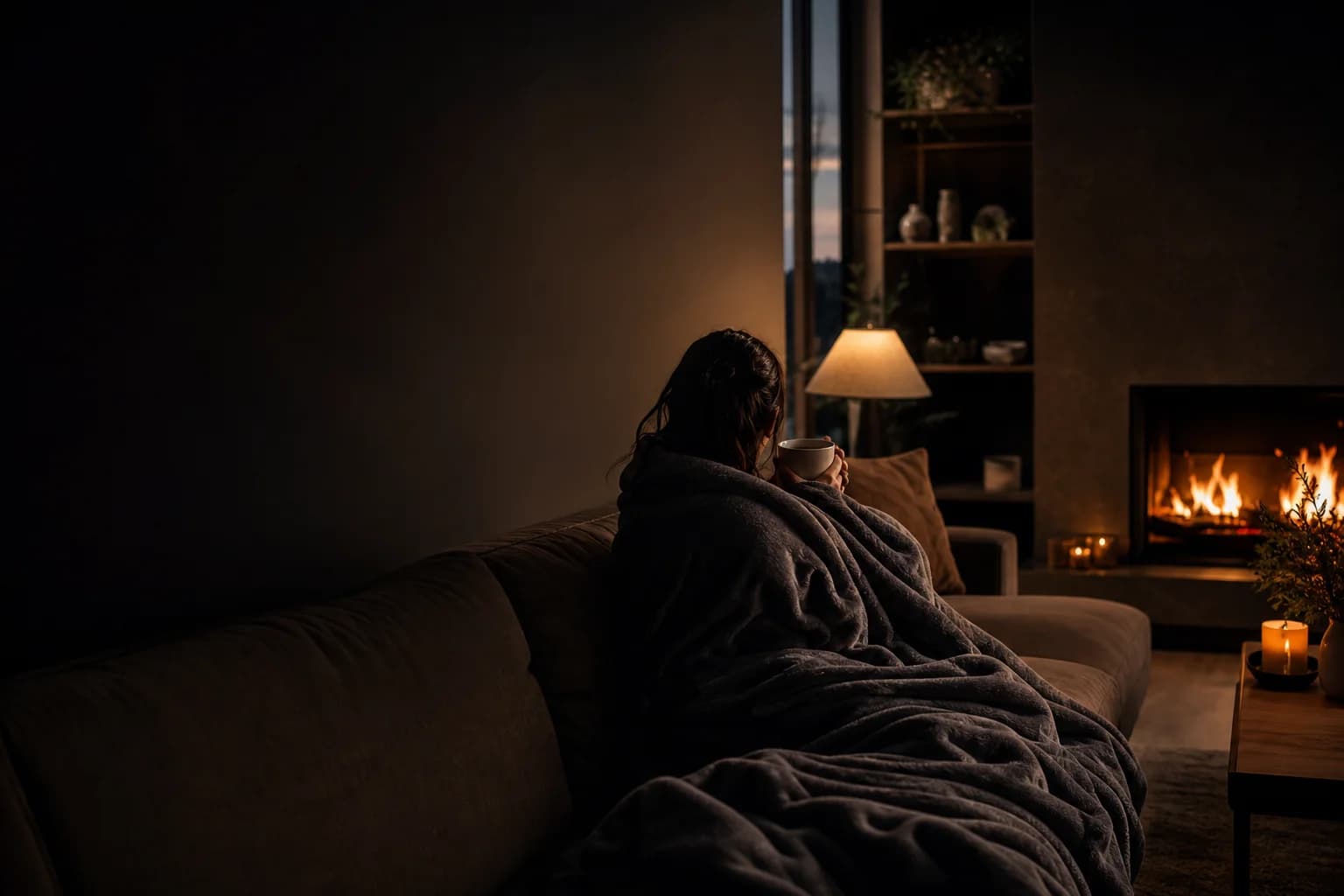
A heated blanket is an overblanket. A fine heating element — on the Coza blanket, a carbon grid you cannot feel through the fabric — runs between two bonded fabric faces and is powered at low voltage through a detachable controller. You lie under it, usually with a duvet over the top.
It is not an electric underblanket, which fits over the mattress and under a sheet and is a different product with different safety rules. It is not a heating pad, which is small and targeted at one part of the body. And it is not a room heater — it warms the air held inside the fabric against your skin, not the air in the room.
The five specifications that decide everything
Almost every heated blanket looks identical in a listing photo. These are the five numbers that separate them.
| Specification | What to hold out for | Coza |
|---|---|---|
| Size (width × length) | 150 × 200 cm to share, 130 × 160 cm for one in bed | 100 × 150 to 180 × 200 cm |
| Heat levels | Six or more, so you can hold a low setting | Nine, backlit controller |
| Auto shut-off | Settable, and long enough for a full night | 1 to 12 hours |
| Washability | Machine washable with a detachable controller | Machine wash 30 °C, controller unclips |
| Safety marks | CE mark in the EU; an ETL listing is a further check | ETL listed, CE marked, overheat protection |
How to choose a heated blanket in four questions
Answer these in order and the decision resolves itself.
- Who is under it? One person seated needs 100 × 150 cm. One person lying flat needs 130 × 160 cm. Two people need 150 × 200 cm minimum. See the size guide.
- Where will it live? A cold bedroom wants maximum coverage and a sherpa face. A sofa wants something small enough to carry.
- Will you sleep under it? If yes, a settable timer is not optional, and neither is overheat protection.
- Will you wash it? If it does not have a detachable controller, it is not really washable, whatever the listing says.
Fabric: flannel, sherpa, or both
Brushed flannel is smooth, light and breathable. Sherpa has a long looped pile that traps more still air, so it holds heat longer with the power off but runs warmer and dries slower.
Coza puts flannel on one face and sherpa on the other so the blanket works in a heated room and a freezing one. Turn it over rather than owning two blankets.
Safety, briefly
Electric blankets sold in the European Union must carry a CE mark declaring conformity with the Low Voltage Directive 2014/35/EU. The international safety standard for the category is IEC 60335-2-17, covering electrically heated blankets, pads and similar flexible appliances. In North America the equivalent is UL 964, and an ETL listing from Intertek certifies compliance with it.
What that means in practice: a current, undamaged, flat blanket with a thermal cut-out and a timer is safe to sleep under. A folded, damaged or decade-old blanket is not, regardless of what mark is on the label.
Sources: IEC 60335-2-17 (International Electrotechnical Commission); Low Voltage Directive 2014/35/EU (European Commission); UL 964 Standard for Electric Bedding (UL Solutions).
Running cost, briefly
Cost = (watts ÷ 1,000) × hours × your price per kWh. A 100 W blanket for eight hours is 0.8 kWh — roughly €0.20 at €0.25 per kWh, and less in reality because the thermostat cycles the element off once the bed is warm. A 2,000 W space heater over the same eight hours uses about twenty times more.
Frequently asked questions
What is the best size heated blanket to buy?
100 × 150 cm for one person seated on a sofa, 130 × 160 cm for one person lying flat, 150 × 200 cm for two people sharing, and 180 × 200 cm to cover a king bed edge to edge. Buy by centimetres rather than by bed name, because bed names differ between countries.
Are heated blankets safe to sleep under?
Yes, when the blanket has a timed auto shut-off, overheat protection and a CE mark or ETL listing, and is used flat and undamaged on a low setting. Folded, damaged or very old blankets are the source of nearly every incident.
Are heated blankets expensive to run?
No — they are among the cheapest heating appliances in the home. A 100 W blanket run for eight hours uses about 0.8 kWh, roughly €0.20 at €0.25 per kWh, and the real figure is lower because the element cycles off once the bed is warm.
Can heated blankets be washed?
The good ones can. Detach the controller and cord, machine wash at 30 °C on a gentle cycle, and air dry flat — never tumble dry. If the controller does not detach, the blanket is not genuinely washable.
What is the difference between a heated blanket and a heated throw?
Size only. A throw is a smaller heated blanket, usually under 130 cm wide, made for one seated person. The heating element, heat levels and timer are the same across the Coza range.
How fast does a heated blanket warm up?
It varies widely by element type. The Coza blanket uses a carbon grid that reaches comfort temperature in about five seconds; older wire-element blankets can take several minutes and often heat unevenly.
Every heated blanket guide
Each guide below answers one specific question in full. They all link back here, so you can read them in any order.
Heated blanket size guide: which size should you buy?
Heated blanket size guide with exact cm measurements for throw, twin, full/queen and king. Match the blanket to your sofa or bed in one minute.
Read the guideSherpa vs flannel heated blankets: which is warmer?
Sherpa vs flannel heated blankets compared on warmth, weight, washing and feel — and why a double-sided blanket removes the choice entirely.
Read the guideIs it safe to sleep with a heated blanket on all night?
Is it safe to sleep with a heated blanket on? What auto shut-off, overheat protection and CE and ETL certification actually mean, plus who should not use one.
Read the guideBest heated blanket for a cold bedroom
The best heated blanket for a cold bedroom: what to look for in heat levels, timers and fabric, and why heating the bed beats heating the room.
Read the guideHow much does it cost to run a heated blanket?
Work out the exact running cost of a heated blanket in euros, with the wattage formula, a worked example and how it compares to a space heater.
Read the guideHow to wash a heated blanket safely
How to wash a heated blanket without damaging the element: detach the controller, wash at 30 °C on gentle, air dry flat. Full step-by-step instructions.
Read the guideThe Coza heated blanket
Nine heat levels, five-second warm-up, machine washable.
Brushed flannel over a sherpa reverse, a carbon element you never feel, and a shut-off you set from one to twelve hours. Four sizes from 100 × 150 cm to 180 × 200 cm, starting at €35.99.