
Heated blankets
Best heated blanket for a cold bedroom
A cold bedroom is usually a building problem — single glazing, an outside wall, a room the radiator never reaches. Heating that room to comfort costs a great deal because you are warming air that leaks straight back out. Heating the 1.5 square metres you actually occupy costs almost nothing by comparison, and that is the whole case for a heated blanket in a cold room.
Written by the Coza team · Last reviewed
Quick answer
For a cold bedroom, the blanket that works is the one that covers the whole sleeping surface, holds a low setting for the full night, and has a sherpa face to trap heat. Width and timer length matter far more than peak temperature.
In practice that means 150 × 200 cm or larger, a timer that runs at least eight hours, and at least six usable heat levels so you can hold a steady low temperature instead of cycling between too hot and too cold.
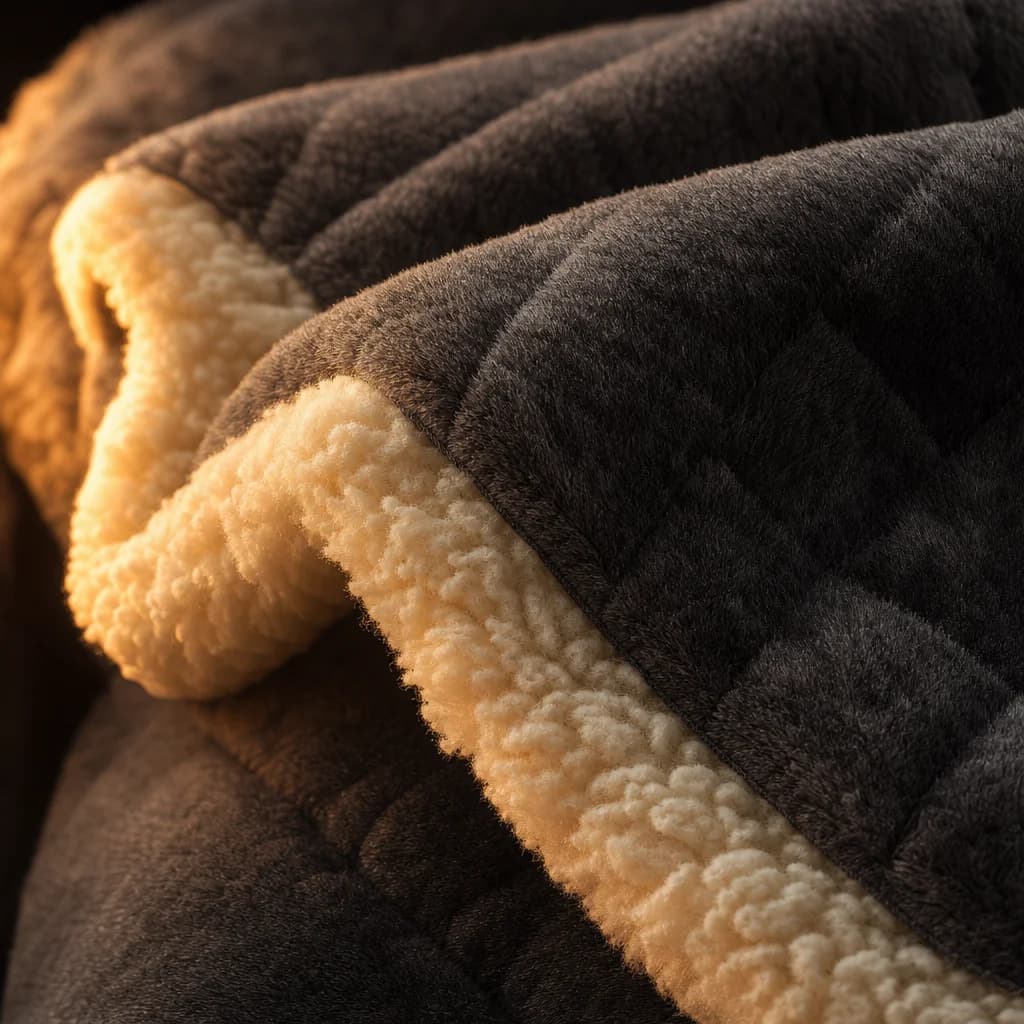
The Coza heated blanket meets all three: sizes to 180 × 200 cm, a one to twelve hour shut-off, nine heat levels and a sherpa reverse. It warms the bed rather than the room, which is why it works in a room your heating cannot fix.
What to look for in a heated blanket for a cold room
Cold-room performance comes down to four specifications. Peak temperature is not one of them — almost every blanket gets hot enough.
- Coverage first. In a cold room, any uncovered edge is a cold edge. Choose 150 × 200 cm for a double, 180 × 200 cm for a king.
- A long timer. Anything with a fixed one or two hour cut-off will leave you cold at 3am. You want a shut-off you can set to eight hours or more.
- Enough heat levels to hold a low setting. Nine levels lets you find the one that holds temperature all night; three levels usually means choosing between too hot and not enough.
- A sherpa or high-pile face. In a cold room the fabric keeps working during the minutes when the element is cycled down.
- Fast heat-up for pre-warming. A five-second heat-up means you can warm the bed while you brush your teeth rather than climbing into a cold one.
Heating the bed instead of the room
A room heater has to raise the temperature of every cubic metre of air in the room, and a cold room loses that air heat continuously through the walls, the glass and the gaps. A heated blanket raises the temperature of a thin layer of air held inside the fabric, directly against you, and the duvet keeps it there.
That is why a heated blanket stays comfortable in a room that a radiator struggles with: it is not fighting the building. It also means the blanket does nothing for the rest of the room — the air stays cold, and you still want the window closed and the door shut.
A heated blanket is a supplement to heating, not a replacement for it. Rooms still need to stay above the temperature that prevents damp and condensation.
The cold-bedroom routine that actually works
Four steps, in order. Most of the benefit is in the first two.
- Pre-warm on a high level for fifteen to twenty minutes before bed, with the duvet folded over the blanket so the heat is trapped.
- Drop to level three or four once you are in. That is the level that holds temperature rather than overheating you at 1am.
- Set the timer for six to eight hours so it powers down on its own overnight.
- Put the sherpa face down, against you, and the duvet over the top.
Which size for a cold room
In a warm room, a Personal Throw is enough for one person. In a cold room, size up — every uncovered edge is a draught.
| Situation | Size | Dimensions |
|---|---|---|
| Cold single bed, one sleeper | Twin | 130 × 160 cm |
| Cold double bed, two sleepers | Full/Queen | 150 × 200 cm |
| Cold king bed, full coverage | King | 180 × 200 cm |
| Cold living room, evenings only | Personal Throw | 100 × 150 cm |
Frequently asked questions
Is a heated blanket cheaper than turning the heating on?
For one or two people in one room, almost always. A heated blanket warms a thin layer of air held against your body; central heating warms every cubic metre in the house and keeps replacing what escapes. It does not replace heating for the rest of the home.
What is the warmest heated blanket setting to sleep on in a cold room?
Pre-warm the bed on a high level for fifteen to twenty minutes, then drop to level three or four for the night. Sleeping on a high setting in a cold room usually results in waking up too hot at 2am.
Will a heated blanket help with condensation or damp?
No. A heated blanket warms you, not the room air, so it has no effect on humidity or condensation. Cold, damp rooms still need ventilation and background heating.
Do I need a bigger heated blanket in a colder room?
Yes. In a cold room any uncovered edge becomes a cold spot, so choose the size that covers the whole sleeping surface rather than the size that fits the sleeper.
Read next
Heated blanket size guide: which size should you buy?
Heated blanket size guide with exact cm measurements for throw, twin, full/queen and king. Match the blanket to your sofa or bed in one minute.
Read the guideHow much does it cost to run a heated blanket?
Work out the exact running cost of a heated blanket in euros, with the wattage formula, a worked example and how it compares to a space heater.
Read the guidePart of our complete guide to heated blankets
This page covers one question in depth. For sizes, fabrics, safety, running cost and washing in one place, start with the main guide.
Heated blankets: how to choose one, and how to use it wellThe Coza heated blanket
Nine heat levels, five-second warm-up, machine washable.
Brushed flannel over a sherpa reverse, a carbon element you never feel, and a shut-off you set from one to twelve hours. Four sizes from 100 × 150 cm to 180 × 200 cm, starting at €35.99.